

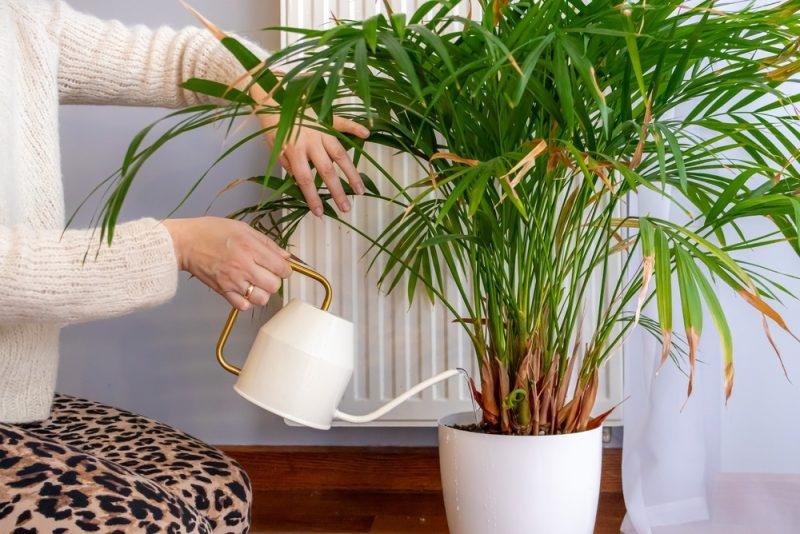
How often you water depends on the plant, the size of the pot, what kind of soil you use, light, temperature, humidity, and—yep—drainage. A cactus can ignore you for weeks while a lush tropical plant wants your attention much sooner. The best move? Check the soil, look at the plant, and water when it actually needs it, not just because it’s Wednesday.
If you’ve ever found yourself wondering, “How often am I supposed to water these things?”—the answer starts with the growing conditions. Some pots barely stay damp for a day; others hold onto moisture for ages. This guide will cover how to tell when it’s time to water, signs to watch for, what changes as the seasons roll by, how much water to use, and some simple habits to keep your houseplants happy.
Watering really comes down to a handful of things: plant type, pot size, soil, light, temperature, and humidity. Succulents want a little drought now and then; most tropical plants like more regular drinks. The condition of the soil matters just as much as the plant itself.
So, skip the weekly routine. Touch the soil first. If the top layer feels dry, go ahead and water it. If it’s still damp, leave it for a bit. That quick check is the best way to avoid both underwatering and soggy roots.
Don't Miss: Discover Pet Friendly Plants for Safe and Happy Homes
The question of how often to water indoor plants becomes easier when you stop treating every plant the same. Soil moisture gives a better answer than a fixed weekly reminder.
Most common houseplants need watering when the upper portion of soil has dried, though the exact depth varies by plant. Succulents and cacti prefer longer dry periods; tropical plants often need more consistent moisture.
A useful starting point is checking plants once or twice a week. That does not mean watering every time. It only means checking.
Knowing when to water houseplants starts with touching the soil. Push a finger about an inch into the potting mix. If it feels dry, watering may be due. If it still feels damp, wait.
Wilting can also help, but it is not a perfect early warning. Some plants droop only after becoming quite dry, while others show stress quickly.
The question of how much water do houseplants need is often answered with a fixed cup measurement. That can be misleading because pot sizes differ. Water should generally reach the root zone thoroughly rather than wetting only the surface.
Water slowly until some water begins draining from the bottom of the pot. This helps moisten more of the soil instead of leaving dry pockets around the roots.
For example, a small 4-inch pot needs much less water than a large floor planter. The goal is even moisture, not a specific number of millilitres.
Container material changes watering houseplants too. Terracotta is porous and usually dries faster than plastic or glazed ceramic. Small pots also lose moisture faster than deep, large containers.
| Condition | Likely watering need |
|---|---|
| Small terracotta pot | More frequent checks |
| Large plastic pot | Less frequent checks |
| Bright sunny window | Often dries faster |
| Low-light corner | Often dries slower |
| Pot with drainage | Safer, easier moisture control |
Suggested Reading: Outdoor Plant Maintenance Tips for a Healthy Garden All Year
Learning how to tell if a houseplant needs water prevents both extremes. Soil, leaves, and pot weight can be checked together, giving a clearer picture than any single sign.
Lift the pot before watering, if possible. A noticeably lighter pot often indicates that moisture has been used. Check the soil too; dry-looking soil combined with a lightweight container is a stronger signal.
Also watch leaf texture. Soft, limp, or curling leaves can indicate dryness, but similar symptoms sometimes appear after overwatering. Context matters.
The practicality of indoor plant watering systems lies in the speedy inspection rather than automatic watering. Monitor moisture levels, inspect leaves and drainage.
So with these practices, you can better anticipate how plants will respond to your care:
The frequency of watering houseplants does change from season to season. Evaporation varies in response to temperature, sunshine, and house heating and cooling, and plants may require different treatments at different times of the year.
The frequency of irrigating houseplants during the summer is influenced strongly by heat and light. A plant near a bright window may dry out quickly, while one in an air-conditioned room may remain moist longer.
Check the soil more frequently during hot periods. Do not automatically double the water. Sometimes only the checking frequency needs to increase.
In winter, plant watering needs tend to be less frequent since plant growth and evaporation may decrease. Lower light also means some plants use water more slowly.
Yet heated indoor rooms can become surprisingly dry. Check the soil rather than assuming every winter plant should stay nearly dry.
A houseplant watering schedule works best as a flexible reminder rather than a strict rule. Apply it to plants and make adjustments according to the soil conditions.
| Plant type | Typical approach |
|---|---|
| Succulents | Let soil dry substantially. |
| Tropical foliage | Water when upper soil dries. |
| Ferns | Avoid prolonged dry soil. |
| Cacti | Allow longer dry periods |
| Seedlings | Keep moisture more consistent. |
These are starting points, not commands. Light, soil mix, pot size, and season can shift watering houseplants considerably.
Pick one or two days for inspection. Feel the soil, check leaves, and look at the drainage tray. This creates a useful houseplant watering schedule without forcing every plant into the same routine.
If a plant remains wet for many days, watering less often may be necessary. If the soil becomes bone-dry very quickly, conditions need closer attention.
Good houseplant care is partly about fixing the conditions around watering. Poor drainage, compact soil, and oversized pots can make even sensible watering habits fail.
Overwatering does not always mean giving too much water at once. It can also mean watering again before the soil has had enough time to dry.
Likewise, underwatering can happen even when watering is frequent if water runs down the sides of a dry root ball. Water slowly and thoroughly when the plant actually needs it.
Also Read: Top Air Purifying Plants For Every Kind of Room in Your Home
In the end, watering houseplants isn’t about memorising some magic number—it’s about paying attention to your plant and what's going on around it. Keep an eye on the soil—make sure it’s not too wet or too dry. A flexible approach works better than a strict schedule. Good houseplant care starts with noticing what's actually happening in the pot.
Ice can cause differential moisture shifts and can plunge roots into sub-optimal water temperatures. It is usually easier to handle the pouring of room-temp water than it is to handle hot water.
Don't water before relocation, unless it is a plant that actually requires it. It will also be more difficult to handle if the pot is very wet and heavy and may lead to more root difficulties.
Ordinary tap water is usually good for most houseplants; however, some sensitive plants might be sensitive to mineral water or treated water. This is more of a plant-specific requirement than a rule.
Avoid leaving collected drainage water in the bottom of the pot regularly. Draw liquid from the pan following watering to ensure that the roots are not constantly flooded with water.
Moisture requirements may be different for young plants and newly propagated plants than they are for older plants. Investigate their soil rather than replicating the soil programme of an old plant.
This content was created by AI